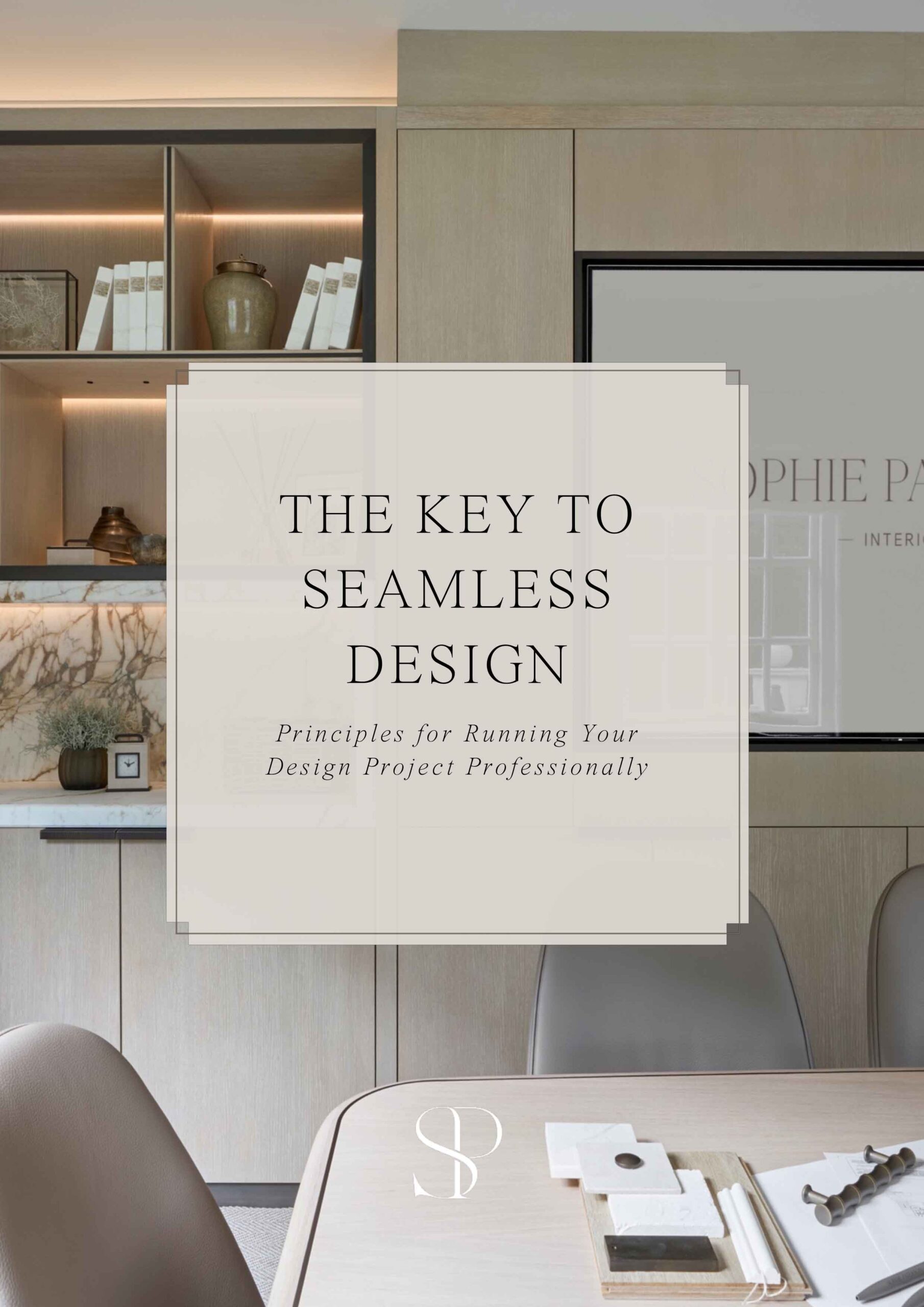
Lighting is one of the most transformative tools in interior design. It can make or break a space, change the mood entirely, and even influence how we feel in a room. It can highlight a beautiful piece of art, elongate a hallway, make a bedroom feel like a sanctuary, or create an intimate, flattering atmosphere around a dining table.
The most common mistake we see is people creating a symmetrical grid of spotlights across the ceiling. It’s an approach that feels logical on paper when we’re working off floorplans and ceiling plans as we’re focusing on what looks balanced from above. But in real life, we rarely look up at the ceiling. It’s far more important to think in elevations and how lighting works from eye level and how it interacts with the things we see and use every day. Think about how light interacts with surfaces and how it bounces off walls. Is the light washing a wall, drawing attention to a beautiful cabinet, or creating a cosy reading nook? These are the kinds of layers that bring a space to life.
At Sophie Paterson Interiors, we consider lighting from the very beginning of every project, treating it as a fundamental part of the architectural and decorative language of the space. It’s never an afterthought, it’s part of the foundation. Lighting should work quietly in the background, subtly highlighting architectural details, drawing attention to beautiful materials, and helping to shape the atmosphere of a room. While chandeliers can add a touch of drama and elegance, they’re rarely the star of our lighting plans.
This image is from our Chelsea apartment project and demonstrates how the lighting works quietly in the background to create a warm and inviting living room design.
1. Understand the Three Key Types of Lighting
To create a well-balanced and atmospheric lighting scheme, you need to incorporate three distinct types of lighting. Each one serves a different purpose, and when layered correctly, they work together to create a room that feels inviting, functional, and visually interesting.
Ambient lighting provides the overall illumination in a room. It’s the soft, general light that fills the space, often achieved with ceiling uplights, central pendants, or light that reflects off walls and ceilings.
Task lighting is focused and functional, designed to help you perform specific activities. Think of bedside reading lamps, directional downlights in kitchens, or under-cabinet lighting.
Accent lighting adds the final layer. It’s used to draw attention to key features like artwork, decorative joinery, textured surfaces, or architectural details. When you design with all three in mind, the result is a space that has depth, balance, and flexibility. It allows you to shift the mood depending on the time of day, the season, or how you’re using the room.
This image is from our Mayfair apartment and demonstrates a well-balanced and layered lighting scheme.
2. Lighting Is Not Just About Brightness
One of the biggest misconceptions about lighting design is that it’s simply about making a room bright enough. In reality, good lighting isn’t about brightness, it’s about creating focus, contrast, and mood. Our eyes are naturally drawn to the brightest areas in a room, which means you can use light to guide people’s attention and create visual flow.
Want to elongate a space? Try lighting the furthest point in the room. Want to make a seating area feel cosy and intimate? Use lower-level lighting to define it. We often create contrast between light and shadow to add depth and intrigue. For example, in a cinema or TV room, you might want to have low-level and intimate lighting that is soft, such as hidden LED strips.
This image is from our Mayfair apartment and showcases how lighting is used to guide your eye around the space.
3. Create Scenes, Not Just Switches
We always recommend incorporating dimmers and scene-setting controls wherever possible. These give you the ability to shift the lighting mood throughout the day, bright and energising in the morning, soft and calming in the evening. These scenes are more than just functional settings, they’re emotional cues. One scene might be designed for entertaining guests, another for winding down after a long day, and another for everyday living.
Lighting, when designed in scenes, becomes part of how you experience your home, subtly supporting your lifestyle and emotional needs.
Georgian Townhouse project showcasing the power of good lighting.
4. Room-by-Room Tips
Dining Rooms • Flattering lighting is essential in dining spaces. Nothing beats the ambience of candlelight, but a dimmable chandelier adds both elegance and a sense of occasion. • Consider a narrow-beam spotlight above the table to create drama and focus. This is especially effective for highlighting floral arrangements or table styling. However, be cautious if you also have a chandelier as they cast some unexpected shadows.
Sophie Patersons home kitchen and dining table featuring a layered lighting scheme.
Bedrooms Avoid relying on spotlights. Instead, aim for a warm, layered lighting scheme that feels restful and cocooning. We love using LED strip lighting behind headboards, soft uplights within joinery, and LED strips in a curtain track to add a subtle glow. Task lighting such as integrated reading wall lights can be added for functional zones.
For wardrobes, aim your spotlights so they hit the centre of the door panels or if you have pairs of doors, centre them on the opening. The goal is always flattering, even light without distracting shadows.
Examples from our Mayfair apartment project of how lighting can be used to draw your eye and highlight textures.
We explore all of this in far more detail inside the course, including coffered ceiling lighting layouts, exact wall light placements, and how to choose beam widths.
Staircases and Hallways For staircases, floor washers or integrated lighting in handrails are both practical and atmospheric. They guide movement without harsh glare.
In long hallways, avoid the tunnel effect by breaking up the space with a layered scheme. A mix of pendants, wall lights, and feature uplights helps create rhythm and makes the corridor feel less like a passageway.
Hide lamp plug sockets by raising them to just behind the table or console top height. It’s a small detail but makes a huge difference to the overall neatness. We often shorten lamp cables or use cable ties to keep them hidden.
Sophie Patersons Entrance Hall with a layered lighting design highlighting architectural details.
5. Temperature and Tone
Light temperature has a huge influence on the atmosphere of a space. Getting it right can make a room feel warm, relaxing, and cohesive while getting it wrong can completely throw off the mood.
2700K is our go-to for most rooms. It provides a soft, warm glow that feels natural without being overly yellow.
We always advise keeping the temperature consistent within each space. Mixing too many different tones in one room can feel jarring. In our course, we provide a full Kelvin spectrum guide to help you plan a cohesive lighting scheme, as well as practical examples for selecting beam widths in downlights depending on ceiling height and room size.
Our Esher Townhouse project featuring bespoke joinery with integrated LED strips.
6. Joinery and Shelving
When done right, lighting joinery can take your interiors to the next level. It adds polish, depth, and a tailored feel but it needs to be done with precision.
LED strips should always be hidden from view. You want to see the glow, not the strip itself. Using diffusers helps to soften and conceal the light source.
For backlighting decorative objects, place LED strips at the back of the shelves. To highlight specific items like vases or sculptures, position the lights at the front. We light the top shelves from underneath and bottom shelves from above and middle shelves benefit from both, this means that the light source always stays hidden.
Our Esher Townhouse project featuring bespoke joinery with integrated LED strips.
7. Working with What You Have
You don’t need a full renovation to dramatically improve your lighting. A few simple, clever changes can have a major impact.
Freestanding uplighters with narrow beams add drama and dimension without being overpowering. They can be placed behind sofas, in plants, or in front of architectural details such as architraves. A really effective idea is to place them on either side of a fireplace to not only create beautiful symmetry but also enhance the architecture and add a warm, inviting glow at night.
Rather than just on/off switches, you can have table lamps or wall lights that are on remote control dimmers that are set up with scenes to create ambience and flexibility to daily living.
Reading floor lamps are lower and more compact than standard floor lamps, with a slim, elegant silhouette that arcs subtly over a sofa or armchair. They offer focused light and bring a touch of quiet sophistication to the room.
The home of our Head of FF&E Designer, Brett, showcasing beautiful, layered lighting and freestanding uplighters.
Lighting isn’t about flooding a room with brightness it’s about drawing the eye to what matters. It’s about creating softness, balance, and atmosphere. When thoughtfully layered, lighting enhances every texture, every colour, and every piece in a room. It adds life to the design and makes the space feel whole. But achieving that layered scheme takes more than instinct it takes understanding, experimentation, and technical know-how. If you’re ready to master lighting like a designer, we’d love to welcome you inside the Sophie Paterson Interior Design Course.
In the course, I walk you through exactly how to design a lighting plan: from where to place each type of light, to choosing the right beam width and angles, colour temperatures, and layering strategies. You’ll find real-life examples from past projects and plans, to guide you. These are not one-size-fits-all templates they’re tools to help you shape your own vision with confidence. With this course we want to demystify lighting and give you everything you need to create lighting plans that feel elevated, cohesive, and effortlessly beautiful.
Discover how we applied these lighting techniques on YouTube in one of the dreamiest London homes we’ve ever designed. This project is proof that lighting really is everything.
For more inspiration, explore our portfolio to see how I translate timeless design principles into distinctive, character-filled homes. For exclusive behind-the-scenes content, including project reveals, product collaborations, and more insights into our design process, subscribe to our YouTube channel.